Welcome to Unpacking Meaning. If you received this from a friend and enjoy it, subscribe here.
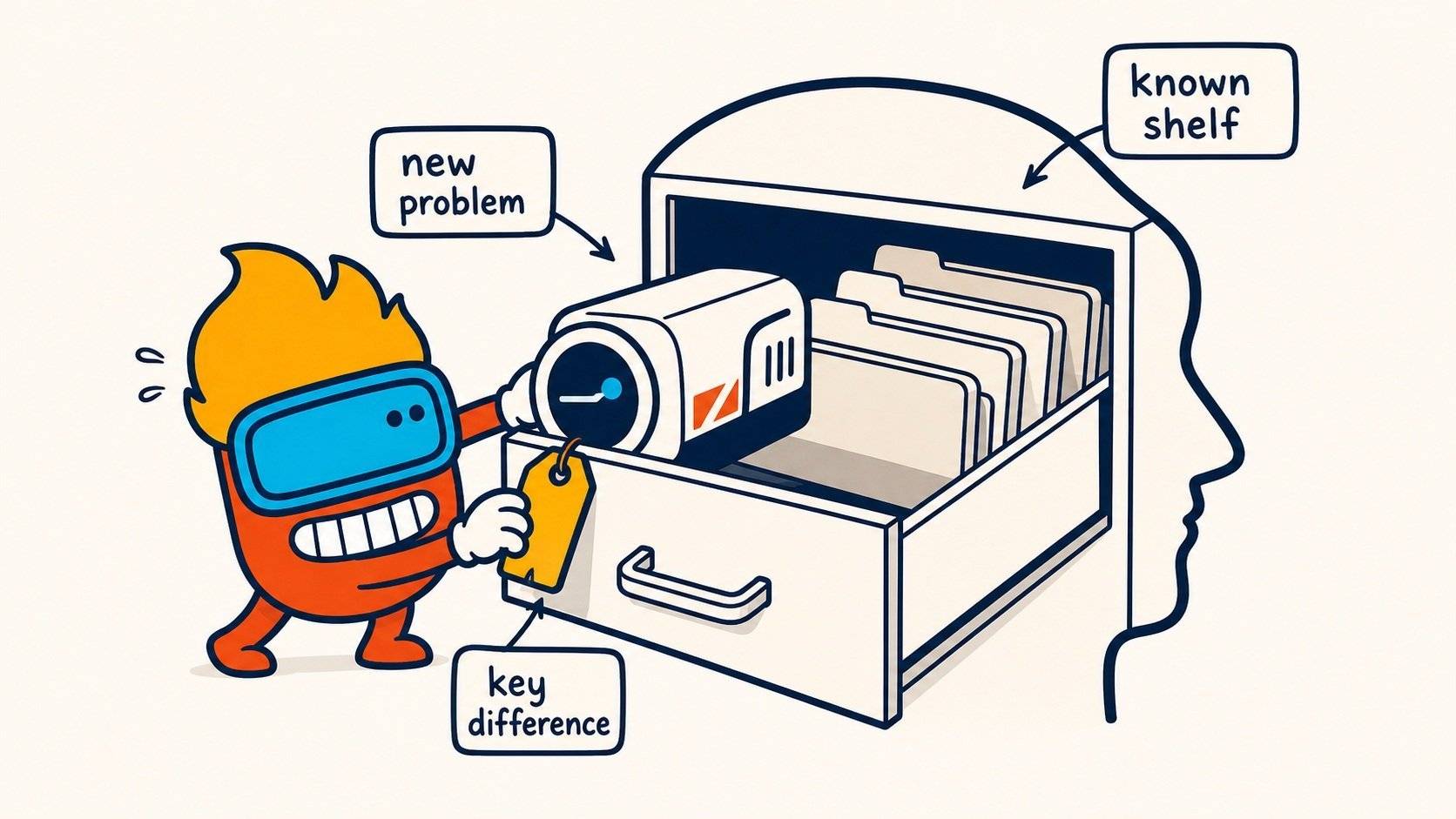
Borrow the category. Name the difference.
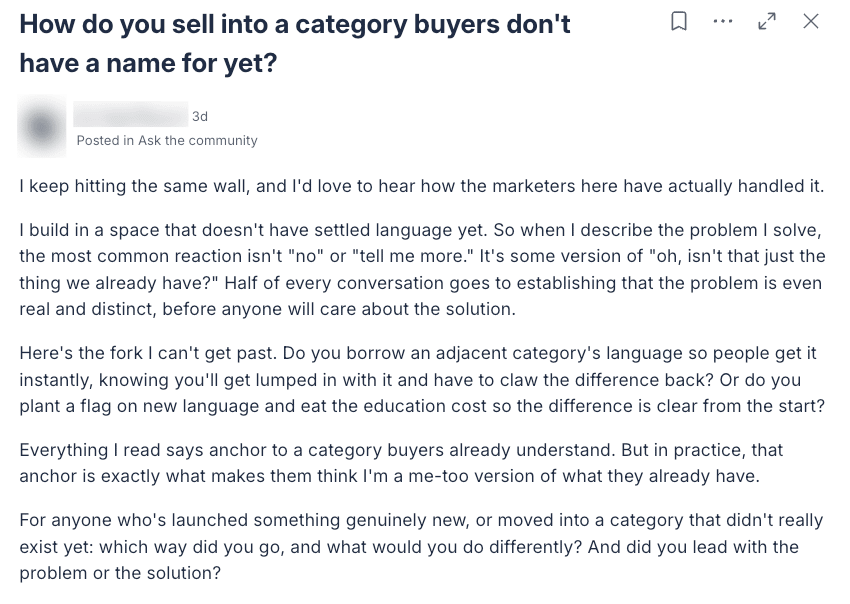
Yesterday, in a B2B community I’m part of, someone asked a question I think more founders are going to run into:
How do you sell something when buyers don’t have a name for the problem yet?
That’s a much harder problem than “people don’t understand our product.”
When buyers don’t have language for the problem, they still need somewhere to put you. They will reach for the nearest familiar box.
“Oh, so it’s basically analytics.”
“Oh, so it’s another workflow tool.”
“Oh, so it’s just an AI agent platform.”
And once they file you there, you have to fight your way back out.
The tempting answer is to invent a new category, with a new name, a new frame and a new language
But that usually creates a different problem: now the buyer has to understand the problem, the category, the solution, and why any of it matters before they can decide to take any kind of action.
That’s a lot of work to ask from someone who was half-reading your homepage between meetings.
So I don’t think the choice is “borrow the category” or “create a new one.”
The way I’d go about it is:
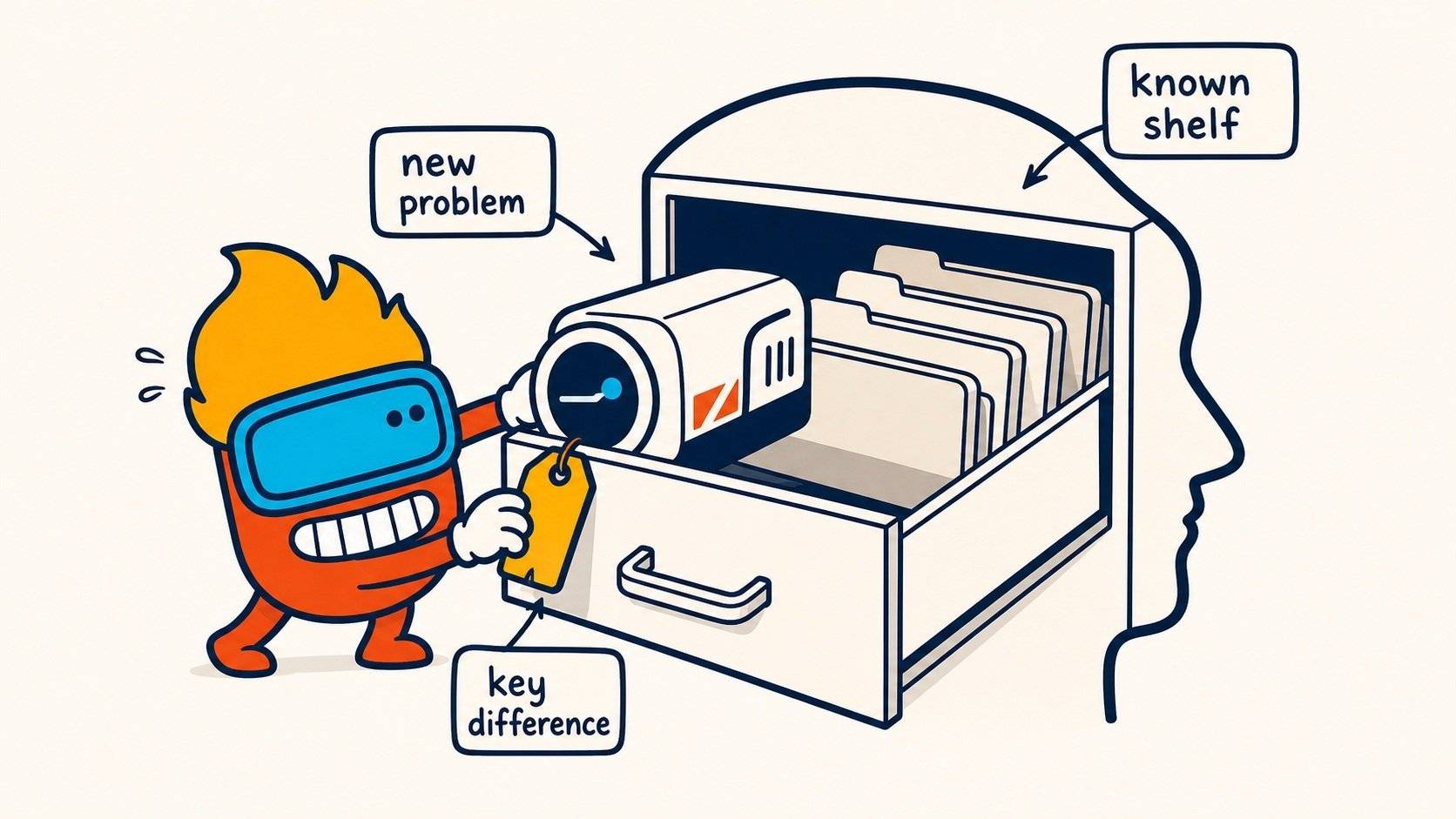
Borrow the category. Name the difference.
Give people a familiar handle first. Then make the contrast obvious before they can reduce you to the thing they already know.
The example I used in the thread was technical, but the principle is simple.
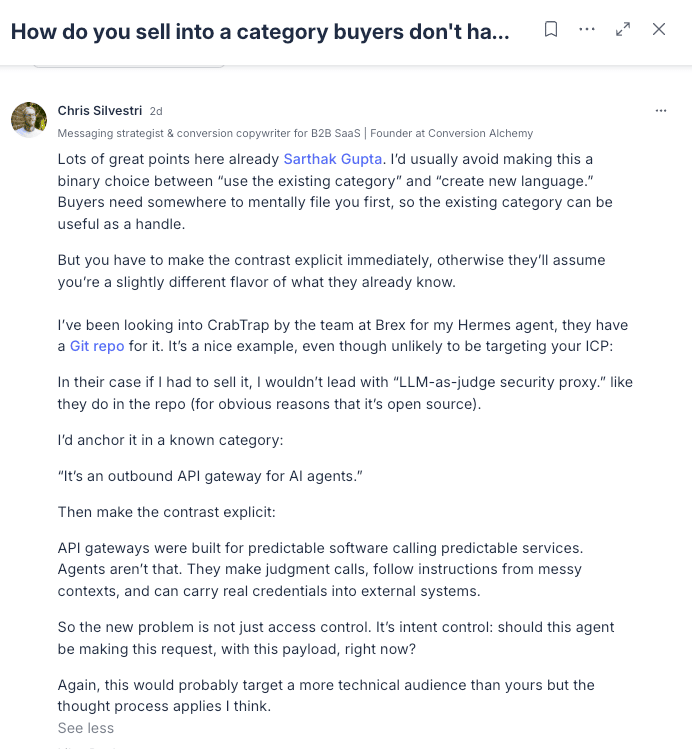
There’s an open-source project called CrabTrap. It helps control what AI agents are allowed to send to external tools and services.
If I were explaining it to a technical buyer, I wouldn’t start with the most precise engineering label.
I’d start with something familiar:
It’s an outbound API gateway for AI agents.
Translation: it sits between an AI agent and the outside world, watching what the agent is trying to do before that action leaves the system.
That gives the buyer a shelf.
Then comes the contrast.
Traditional API gateways were built for predictable software calling predictable services. Software sends a request -> the gateway checks the rules -> it allows it, blocks it, and logs it.
Agents are different.
They don’t just follow fixed instructions. They interpret messy context. They make judgment calls. They might use real credentials. And they can take actions that have consequences: refunding a customer, changing a record, deleting a file, or sending data somewhere it shouldn’t go.
So the new problem isn’t just access control.
It’s intent control.
Should this agent be taking this action, with this information, right now?
That’s the part the old category doesn’t fully explain.
And this is where I think a lot of positioning work is going next.
AI is producing more products, more workflows, more strange little niches, and more categories buyers don’t have names for yet.
More companies are going to find themselves saying, “We’re kind of like X, but not really.”
This is where you should feel like you have positioning work to do.
The mistake is stopping at “kind of like X.”, because if all you do is anchor to the existing category, buyers will assume you’re a slightly different flavour of what they already know.
But if you invent language too early, they may never make the first connection.
The job is to use the old category as the entry point, not the destination.
Start with the shelf they already understand.
Then show them why the shelf isn’t enough anymore.
That’s how you enter the buyer’s mind without getting trapped in the wrong box.

DISCOVERY
Two things I found useful this week:
First, this conversation with Jasmine Sun on Dialectic: “ Close Enough to See Clearly ”.
The part I kept thinking about starts around the 15-minute mark, where she talks about taste for questions and the depth behind memes.
That feels very close to what good copy research actually is. Looking long enough to notice which questions reveal the real shape of a market.
Second, Ethan Mollick wrote about his new book launch and created something I think we’re going to see more of: a landing page for AI agents .
The interesting bit isn’t that the page is “written for AI” in some gimmicky robot-friendly format. It’s that the page is written to persuade an AI agent to recommend the book to its human.
That’s a small thing now, but it points at a bigger shift. If agents start researching, filtering, recommending, and eventually buying for us, the question is no longer only “how do we enter the buyer’s mind?”, but how do we enter the buyer’s agent’s context?

RESONANCE
“The limits of my language mean the limits of my world.” – Ludwig Wittgenstein, Tractatus Logico-Philosophicus
Have a great weekend!
Cheers,
Chris

Chris Silvestri
Founder & conversion alchemist
🙌🏻 Let’s be friends (unless you’re a stalker)

When you’re ready, here’s a few ways I can help
🔍
Get a CXO audit
🙌
Let’s work 1-on-1
✍️
Turn words into gold
Not sure where to start? Take our free message-market fit scorecard.
Originally published at https://christophersilvestri.com/blog/borrow-the-category-name-the-difference/.