Executive Summary
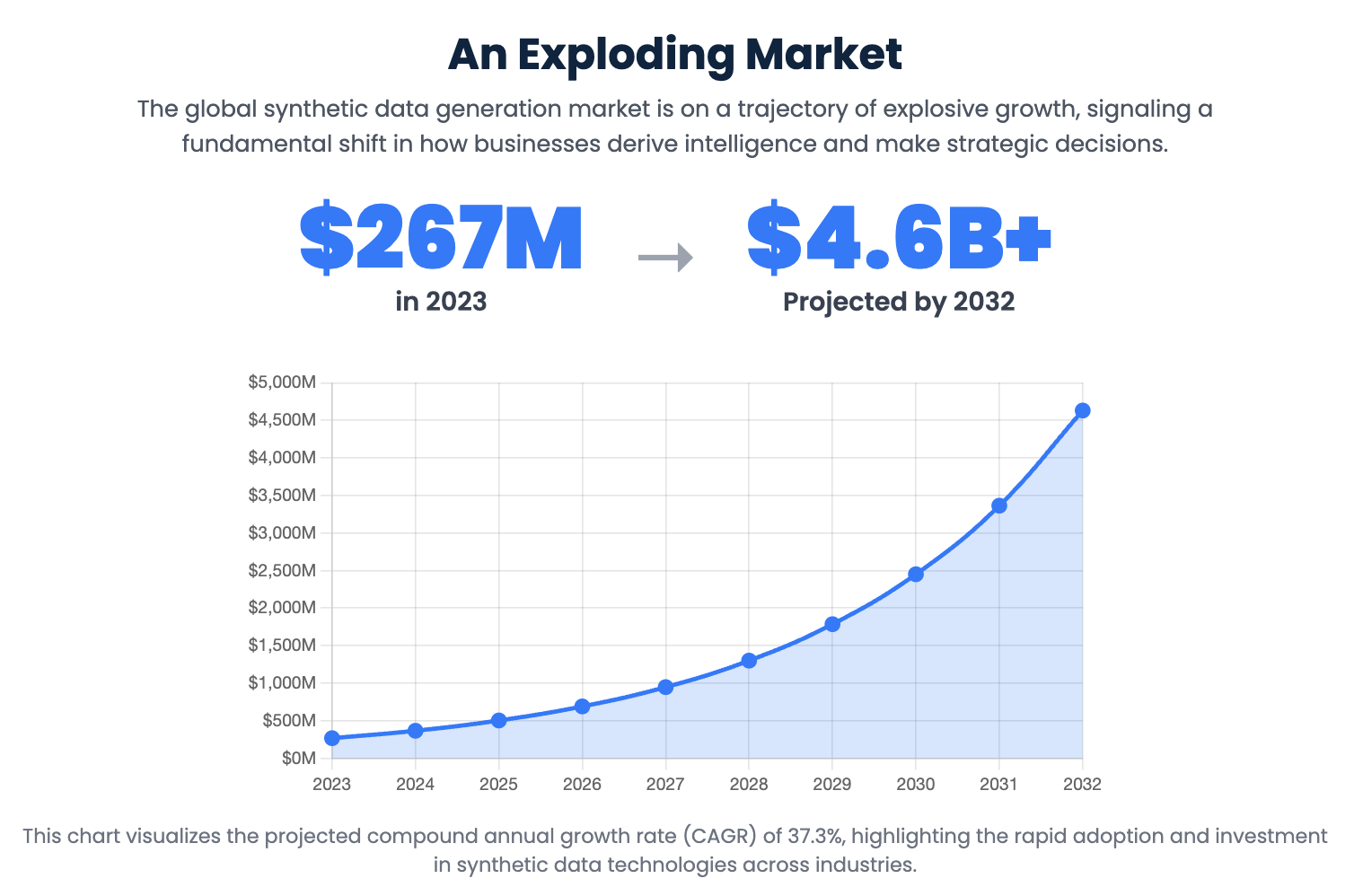
Synthetic research, a transformative methodology powered by generative artificial intelligence (AI), is rapidly moving from a niche technological concept to a strategic imperative for businesses. By generating artificial data and simulated human respondents that mimic the statistical properties and behaviors of real-world audiences, this approach offers unprecedented advantages in speed, scale, and cost-efficiency for both marketing and product development. The global synthetic data generation market, valued at approximately $267 million in 2023, is projected to surge to over $4.6 billion by 2032, signaling a fundamental shift in how organizations derive insights and make decisions.
This report provides a comprehensive analysis of the current state of synthetic research, examining its foundational technologies, applications, strategic implications, and future trajectory. It is designed to equip senior business leaders with the nuanced understanding required to navigate this emerging landscape.
Key Findings:
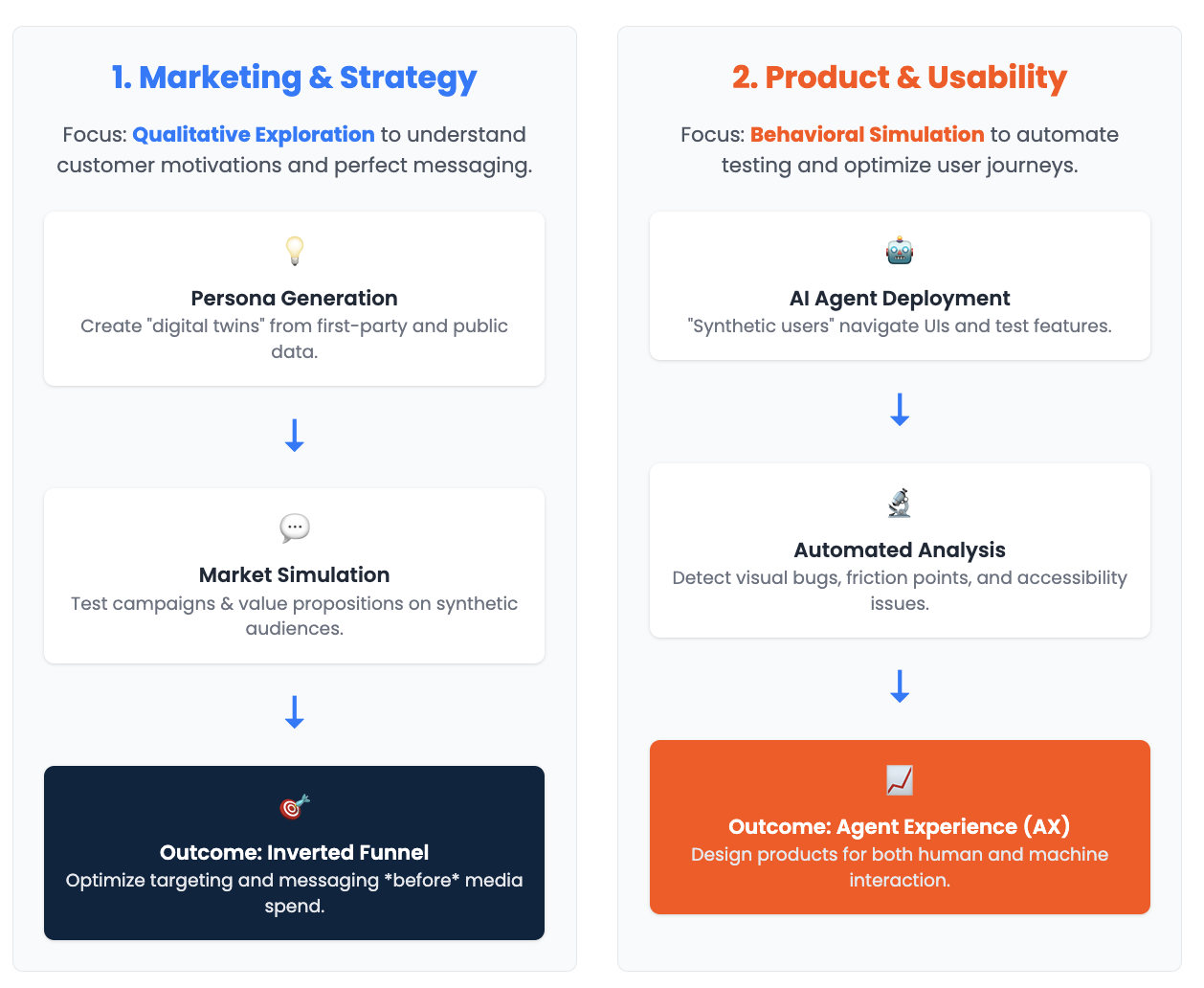
- A Dual-Track Revolution: The synthetic research market is evolving along two distinct tracks. For product development and usability , the focus is on behavioral simulation , with AI agents automating UI/UX testing, load testing, and journey optimization. For marketing , the emphasis is on qualitative exploration , with conversational AI personas and “digital twins” enabling rapid message testing, market simulation, and persona development. This divergence necessitates different tools, skill sets, and strategic approaches for each function.
- The New Marketing Playbook: Synthetic research inverts the traditional marketing funnel. It allows for the low-cost, risk-free simulation of hyper-specific niche audiences to perfect messaging and product-market fit before committing to large-scale media spends. This shifts investment from reactive campaign optimization to proactive, continuous simulation, fundamentally altering budget allocation and the role of marketing agencies.
- From User Experience (UX) to Agent Experience (AX): The rise of autonomous AI agents that interact with digital services on behalf of humans creates a new design imperative. Product teams must now design not just for human users but also for machine interpretation. This evolution toward “Agent Experience” (AX) will require new design principles, create new job roles, and pose a long-term strategic challenge to business models reliant on direct user engagement.
- The Adoption Paradox: A Crisis of Trust: While the benefits of speed and cost are clear, the single greatest barrier to widespread adoption is a “crisis of trust.” Significant concerns about data quality, algorithmic bias, AI “hallucinations,” and a lack of emotional nuance persist. The market’s maturity will be contingent on the development of robust validation frameworks and potentially a new industry of third-party “Validation-as-a-Service” (VaaS) providers to certify the integrity of synthetic outputs.
- Governance as a Prerequisite: The technology is advancing far faster than the ethical and legal frameworks needed to govern it. Responsible adoption is not possible without proactive internal governance. This includes establishing clear policies on data transparency and disclosure, implementing rigorous bias audits, and creating tiered-risk frameworks to guide the use of synthetic insights in decision-making.
Strategic Recommendations:
Synthetic research should be viewed not as a wholesale replacement for traditional methods but as a powerful complement that augments and accelerates the insight-generation process. The most effective strategy is a hybrid one, where synthetic methods are used for early-stage, directional, and low-risk exploration, while traditional human-centric research is reserved for high-stakes validation and capturing deep emotional context.
To capitalize on this transformation, organizations must:
- Adopt a Tiered-Risk Framework: Classify business decisions by risk level and mandate the appropriate research methodology, ensuring that high-stakes choices are always validated with real human data.
- Invest in New Skills: The critical skills are no longer just data collection but prompt engineering and critical thinking . Teams must be trained to ask the right questions of AI and to rigorously challenge its outputs.
- Establish an Ethics & Governance Council: Proactively create a cross-functional body to set internal standards for transparency, bias mitigation, and responsible use, thereby managing legal and reputational risk.
- Manage the Cultural Shift: Recognize that the “democratization of insight” will challenge existing organizational structures. The role of central research teams must evolve from data gatekeepers to centers of excellence that focus on validation, governance, and training.
Ultimately, the successful integration of synthetic research is a change management challenge as much as a technological one. The companies that thrive will be those that embrace its potential for speed and scale while implementing the rigorous governance and critical oversight necessary to ensure the integrity and reliability of its outputs.
Part I: The Foundations of a New Research Paradigm
1.1 Defining the Domain: From Synthetic Data to Synthetic Respondents
To grasp the strategic implications of synthetic research, it is essential to first establish a clear and precise understanding of its core components. The field is built upon a hierarchy of concepts, starting with the foundational element of synthetic data and extending to its application through simulated human agents.
Synthetic Data is artificially manufactured information created by computer algorithms to replicate the statistical properties, patterns, and distributions found in real-world datasets. 1 It is not merely “fake” or randomly generated data; it is a sophisticated, statistically representative proxy designed to look and behave like original data without being a direct copy. 4 The primary purpose of synthetic data is to serve as a substitute for real-world information in scenarios where acquiring such data is difficult due to privacy concerns, regulatory restrictions (such as GDPR), high costs, scarcity, or security risks. 6
Synthetic Research is the specific application of these data generation techniques to the fields of market and user research. 9 It involves leveraging AI to produce not just static datasets, but dynamic, human-like responses, behaviors, and preferences to derive actionable business insights. 11 This methodology aims to increase efficiency, reduce costs, and overcome the traditional challenges associated with gathering market intelligence from human participants. 9
Synthetic Respondents and Users are the central actors in synthetic research. These are AI-generated personas or virtual representations of consumers, customers, or users that are programmed to simulate their thought processes, preferences, and decision-making behaviors. 9 These are not simple, pre-programmed chatbots. Instead, they are dynamic, interactive, and context-aware agents capable of holding lifelike conversations and answering open-ended questions. 12 Their intelligence is derived from being trained on vast repositories of human behavioral data, which can be further refined and customized by conditioning them on a company’s own proprietary, first-party intelligence, such as past survey results or operational data. 14
It is crucial to distinguish this proactive generation of new data from older, reactive data manipulation techniques. Methods like imputation (filling in missing values), extrapolation (projecting trends from known data), and weighting (adjusting the influence of certain observations) all require an existing dataset to manipulate. 16 In contrast, synthetic research generates entirely new, independent observations that statistically reflect a population of interest, thereby increasing the robustness and size of a sample in a way these traditional techniques cannot. 16
1.2 The Technology Stack: A Primer on Generative AI, GANs, and VAEs
The recent and rapid advancement of synthetic research is a direct result of breakthroughs in artificial intelligence, particularly in the domain of generative models. Understanding the underlying technology stack is key to appreciating both the capabilities and limitations of this approach.
Generative AI and Large Language Models (LLMs): The current explosion in synthetic research capabilities is overwhelmingly driven by the power of Generative AI, with Large Language Models (LLMs) like OpenAI’s GPT-4 at the forefront. 9 These models are trained on immense volumes of text, conversational data, and documented human behaviors. This training enables them to excel at generating nuanced, human-like qualitative responses and simulating complex, context-aware conversations. 10 When prompted with a specific persona and scenario, an LLM can “become” that persona and respond to interview questions or survey prompts in a remarkably realistic manner, forming the backbone of modern synthetic qualitative research. 10
Generative Adversarial Networks (GANs) and Variational Autoencoders (VAEs): While LLMs are masters of unstructured, conversational data, GANs and VAEs are the primary algorithmic engines for creating structured, quantitative synthetic data. 4
- GANs operate through a competitive, two-part system. A “generator” network creates new data points (e.g., rows in a customer database), while a second “discriminator” network attempts to distinguish this artificial data from real data. The two networks are trained in opposition: the generator continuously improves its output to fool the discriminator, and the discriminator gets better at spotting fakes. This adversarial process results in the generation of highly realistic synthetic datasets that capture the complex correlations and distributions of the original data. 8
- VAEs work by learning a compressed, probabilistic representation of the real data. They then use this learned representation to generate new data points that follow the observed distribution patterns. This approach is effective at ensuring that synthetic user actions or data profiles feel natural and are aligned with realistic scenarios. 19
Together, these technologies form a complementary stack: LLMs power the conversational “synthetic personas” used in qualitative marketing research, while GANs and VAEs generate the large-scale, structured datasets needed for quantitative analysis, model training, and product testing simulations.
1.3 A Taxonomy of Synthetic Research: Differentiating Methodologies
The term “synthetic research” encompasses a range of methodologies, each with distinct characteristics, use cases, and trade-offs between privacy and data fidelity. For strategic planning, it is vital to understand this taxonomy to select the appropriate approach for a given business objective.
Fully Synthetic Data: This is the purest form, involving the generation of an entirely new dataset where there is no one-to-one mapping back to any real individual. 21 The model learns the statistical properties of the real data and then creates a completely artificial dataset from scratch. This method offers the highest possible level of privacy and is often outside the scope of regulations like GDPR, making it ideal for public data sharing, broad market simulations, or training AI models where privacy is the paramount concern. 7 Its primary drawback is that its utility is entirely dependent on the quality of the generative model; any flaws or biases in the model can lead to a dataset that is not a faithful representation of reality. 21
Partially Synthetic Data: This is a hybrid approach that balances privacy and utility by replacing only specific, sensitive variables within a real dataset with synthetic values. 7 For instance, in a customer transaction database, real transactional patterns and product details might be retained, while personally identifiable information (PII) such as names, account numbers, and addresses are replaced with artificially generated equivalents. 7 This technique is widely used in regulated industries like finance and healthcare, where it allows analysts to work with realistic data structures for tasks like fraud detection or medical research without exposing sensitive personal information. 7
Augmented Synthetic Data: This is a particularly powerful and pragmatic methodology, especially in the B2B context where broad public data is scarce. 17 The process begins with collecting a small, custom sample of real research responses from a niche target audience. This primary data is then used to “condition” or fine-tune an AI model, which in turn generates a much larger, statistically robust set of synthetic responses that mirror the characteristics of the initial sample. 11 This “augments” the original research, effectively increasing the sample size and filling demographic or firmographic gaps without the high cost and long timelines of recruiting more human participants. 23 It enhances the analytical power of small, targeted studies.
Synthetic Conversation Tools (Digital Twins/AI Personas): This category represents a qualitative shift in application. Rather than generating large, static datasets for analysis, this approach focuses on creating interactive, conversational AI agents that embody a specific user or customer persona. 10 These “digital twins” are built upon real research data and allow marketers and product developers to conduct simulated interviews, test messaging, and explore motivations in real time. 25 The goal is not to produce a dataset but to provide a scalable, always-on focus group for rapid qualitative exploration and hypothesis testing. 10
The proliferation of these distinct terms—”synthetic users,” “digital twins,” “augmented data”—is more than just semantic variation; it signals a fundamental divergence in the market’s evolution. An examination of their usage reveals a schism in both application and target end-user. Terms like “synthetic users” and “synthetic monitoring” are most frequently associated with behavioral simulation —mimicking actions like clicks, page navigation, and system load for UI/UX testing and performance monitoring. 19 The focus here is quantitative and action-oriented, serving the needs of product, engineering, and QA teams. Conversely, terms like “digital twins” and “AI personas” are predominantly linked to qualitative, conversational insight for marketing and strategy teams, where the goal is to “talk to” a simulated customer to understand motivations, test messaging, and explore pain points. 10
This bifurcation has profound strategic implications. It indicates that the “synthetic research” market is not monolithic but is splitting into two distinct ecosystems. One is building tools for technical validation, while the other is creating platforms for strategic exploration. This will inevitably lead to different vendor landscapes, divergent pricing models (e.g., per-simulated-user-test versus a platform subscription for persona interviews), and, most importantly, different required skill sets. A product team adopting this technology will need to invest in skills related to test scripting and quantitative data analysis. A marketing team, in contrast, will need to cultivate expertise in prompt engineering and qualitative interpretation. Business leaders must recognize this division to avoid seeking a one-size-fits-all solution and instead resource their teams with the specific tools and talent appropriate for their distinct objectives.
Part II: Transforming Marketing with Synthetic Insights
The application of synthetic research is poised to fundamentally reshape the marketing function. By providing a risk-free environment to simulate consumer behavior, test messaging, and build data-rich personas at unprecedented speed, it enables a more agile, predictive, and precise approach to marketing strategy and execution.
2.1 Simulating the Market: Predictive Analytics and Consumer Behavior
One of the most powerful applications of synthetic research in marketing is the ability to create dynamic, computational models of entire markets to analyze and predict complex consumer interactions. 29 This capability allows marketing departments to shift from a historically reactive posture—analyzing past campaign results—to a proactive one, where future market dynamics are simulated and explored before strategic decisions are made. 29
The core methodology driving this is often agent-based modeling , where thousands of “agents”—synthetic consumers with defined characteristics and behavioral rules—interact with each other and with brands within a simulated environment. 29 Specialized software platforms, such as those offered by AnyLogic, provide the tools to build these complex market simulations. Marketers can use these virtual sandboxes to test a wide range of strategic questions, such as how brand loyalty might shift in response to a competitor’s new product, how consumers will react to a promotional offer, or what the market adoption curve for a new service might look like. 30
The primary benefit of this approach is the ability to conduct extensive “what-if” scenario planning without any real-world risk or expenditure. 9 For instance, a company can simulate the potential impact of a 10% price increase on market share, model the consequences of entering a new geographical market, or forecast how shifts in consumer sentiment might affect purchasing patterns. 3 This dramatically improves the accuracy of forecasting and allows for more confident and optimized allocation of marketing resources. 29 A notable real-world example involved a major US airline that wanted to explore generating new revenue through additional fees. By using market simulation to evaluate the long-term impact on customer perception and loyalty, beyond the short-term revenue gain, the airline ultimately decided against implementing the policy change, avoiding a potentially damaging strategic misstep. 30
2.2 Optimizing the Message: Pre-testing Campaigns and Value Propositions
Synthetic research provides marketers with a powerful and agile tool for pre-testing and refining creative content, messaging strategies, and core value propositions before committing significant media budgets. 9 By simulating audience reactions, brands can identify the most resonant and persuasive approaches, thereby increasing campaign effectiveness and return on investment. 9
The mechanism for this typically involves creating synthetic personas that accurately represent key target segments. Marketers can then “survey” or “interview” these AI-generated respondents about various campaign concepts, ad copy, or product positioning statements. 10 For example, a beverage company planning to launch a new energy drink could generate a synthetic audience of health-and-fitness enthusiasts and test several different marketing campaigns on them. The AI’s responses would provide rapid feedback on which campaign best communicates the product’s benefits, which visuals are most appealing, and which taglines are most memorable—all within a matter of hours. 26
This capability fundamentally changes the creative development process. Instead of relying on slow and expensive traditional methods like focus groups to get feedback on a few final concepts, marketers can use synthetic research to test dozens of early-stage ideas iteratively. 24 This agile feedback loop allows for continuous refinement and optimization, ensuring that the final creative output is already validated against the target audience’s simulated preferences. This process also helps in crafting value propositions that are precisely tailored to address the specific pain points and motivations of different customer segments, as identified through the synthetic research process. 10
2.3 Precision Targeting: Building and Surveying Personas at Scale
A cornerstone of modern marketing is the ability to target specific customer segments with personalized messages. Synthetic research dramatically enhances this capability, primarily by overcoming the significant hurdles of data privacy and the difficulty of reaching niche audiences.
The privacy advantage is a key driver of adoption. Regulations like GDPR have made it increasingly difficult and risky to use real, individual-level customer data for granular analysis and simulation. 31 Synthetic data provides a direct solution. By generating artificial customer profiles that retain the statistical characteristics of real customers without containing any personally identifiable information (PII), it allows for deep, privacy-compliant analysis. 3
Platforms have emerged that automate this entire process. A company like Delve AI, for instance, can ingest a business’s first-party data from sources like Google Analytics and customer databases, merge it with over 40 public data sources, and automatically generate detailed, data-driven buyer personas in a matter of hours. 25 These personas are not just simple demographic summaries; they include rich detail on buyers’ goals, challenges, psychological drivers, and media consumption habits. 33
Once created, these synthetic personas can be surveyed or interviewed at scale, providing quantitative insights in minutes rather than weeks. 25 This is particularly valuable for data augmentation. If a research study has a small sample of a hard-to-reach demographic (e.g., high-income millennials interested in sustainable travel), synthetic data can be generated to expand that segment, providing a more robust dataset for analysis and strengthening the statistical power of the research. 16 This allows marketers to explore and understand niche markets with a level of detail that was previously unattainable through traditional survey methods alone.
2.4 Case Study Deep Dive: Delve AI in Action
The practical impact of persona-based synthetic research is best illustrated through real-world applications. The work of Delve AI with clients Super Butcher and Bask Suncare provides compelling evidence of its strategic value.
Super Butcher: Driving an Omnichannel Retail Strategy
Super Butcher, a family-owned Australian meat retailer, faced a common challenge: aligning their in-store and online customer experiences. While their physical stores primarily attracted a core demographic of males aged 24-54, their online strategy was less defined.33 By using Delve AI’s platform to analyze their website audience data, they made a pivotal discovery: their most valuable online customer segment consisted of female grocery buyers within the same age range, whose primary motivation was convenience and finding healthy meals for their families. 33
Armed with this data-driven insight, Super Butcher executed a targeted overhaul of their digital presence. They revamped their website to feature content that would appeal to this persona, such as a “Recipes & Tips” section, and updated their imagery to prominently feature women and families. Their email marketing was personalized to reflect these new personas’ preferences and channel habits. The results were concrete and measurable: email campaigns achieved conversion rates of 4.5% for online purchases and up to 7% for in-store purchases, and the overall email click-through rate improved by 29%. 25 This case demonstrates how synthetic persona generation can uncover crucial market segments and translate those insights directly into revenue growth.
Bask Suncare: Building a Hyper-Specific Brand
Bask Suncare, a skincare brand dedicated to eliminating skin cancer, knew it had a diverse customer base but struggled to segment it effectively to guide marketing campaigns.35 They needed deeper insights into their customers’ interests, lifestyles, and purchase patterns. By using Delve AI’s persona generator, Bask was able to automatically segment its audience and build hyper-specific brand personas.35 This allowed them to move from generic messaging to highly targeted campaigns that resonated with the unique values and motivations of each segment. The reported outcomes were a significant boost in marketing efficiency, increased customer satisfaction, and strengthened brand loyalty, showcasing how synthetic research can provide the foundation for a more focused and effective brand strategy.25
2.5 The B2B Frontier: Leveraging Augmented Data for Niche Markets
The world of business-to-business (B2B) marketing presents a unique set of research challenges that make it a fertile ground for synthetic methodologies, albeit with a different approach than in consumer markets. B2B research is often characterized by high costs, a lack of broad public data, and extreme difficulty in recruiting and surveying niche, high-value decision-makers such as procurement leads or specialized engineers in a specific industry. 17 Consequently, creating reliable synthetic respondents entirely from scratch is often not feasible or credible. 17
The most effective and widely advocated solution for this domain is augmented data . This approach begins with a small-scale, custom primary research effort—for example, conducting in-depth interviews with a dozen key opinion leaders or surveying a small panel of target professionals. The real responses from this initial fieldwork are then used to train and condition an AI model, which subsequently generates a much larger synthetic sample that statistically mirrors the nuanced responses of the original niche experts. 17 This method increases the statistical robustness of the findings, allowing for more confident analysis without the prohibitive expense and time required to find and survey hundreds of hard-to-reach individuals. 17
The B2B synthetic research workflow is therefore not a simple linear process but an iterative one of triangulation. It involves weaving together multiple data streams: primary inquiries (targeted surveys and interviews), secondary data (industry reports and market analysis), and expert validation (workshops with internal subject-matter experts or channel partners). 10 When findings from these different sources diverge, it signals a need for deeper probing. For instance, a B2B technology vendor using this synthetic approach might discover that published data suggests price is the key driver, but their augmented survey data reveals that procurement teams actually prioritize Total Cost of Ownership (TCO) and ease of integration, while their interviews with operations managers highlight a critical need for real-time mobile alerts—insights that allow for the creation of highly tailored and effective value propositions for each stakeholder. 10
The adoption of synthetic research fundamentally reorders the traditional marketing process. Historically, marketing strategy has followed a top-down funnel approach: large, initial investments are made in broad awareness campaigns to cast a wide net, followed by data collection and analysis to see what resonates, and finally, optimization and targeting based on those results. Synthetic research enables an inversion of this model. Marketers can now begin their strategic process at the very bottom of the funnel, in a low-cost, risk-free simulated environment. Instead of launching a broad campaign, a company can first create “synthetic audiences” or “digital twins” of dozens of hyper-specific customer segments. 10 As demonstrated by the Super Butcher case, a marketer can simulate the response of “female grocery buyers aged 24-54” to ten different value propositions before a single dollar is spent on media or a line of ad copy is written for a live campaign. 33
This means that the “targeting” and “personalization” stages, traditionally the final and most refined steps of a campaign, can now occur at the very beginning of the strategic planning cycle. This has profound implications for how marketing resources are allocated. The paradigm is shifting away from large, upfront media spends designed to gather initial data, toward smaller, continuous investments in “simulation and refinement” platforms and processes. The value proposition of a media agency may evolve from being primarily a “media buyer” to becoming a “simulation strategist,” who helps clients test and war-game countless scenarios to identify the optimal strategy before committing to a major buy. Consequently, the measurement of marketing ROI will expand beyond just campaign outcomes to include the significant cost-avoidance and risk-mitigation achieved through effective pre-campaign simulation.
Part III: Revolutionizing Product Development and Usability
In the realm of product development and user experience (UX), synthetic research is emerging as a critical tool for accelerating innovation cycles, automating laborious testing processes, and de-risking the launch of new products and features. Its impact is felt across the entire product lifecycle, from initial ideation to post-launch performance monitoring.
3.1 De-Risking Innovation: Rapid Concept and Feature Testing
One of the most significant values of synthetic research for product teams is its ability to de-risk the innovation process. It allows teams to forecast market demand, identify potential user pain points, and iteratively refine product offerings before significant development resources are invested and before a product is launched. 9 This is particularly valuable when testing new or disruptive concepts, as it can be done without revealing sensitive intellectual property to the public or competitors. 16
The process involves generating synthetic user responses to gauge preferences for hypothetical products or features. 37 For example, a software development team can create a survey about a proposed new feature and, using a platform like Relevance AI, generate a table of responses from 25 synthetic participants representing different user profiles. 37 This simulated feedback allows the team to assess the feature’s appeal, anticipate potential usability issues, and make data-informed decisions about whether to include it in the product roadmap—all without writing a single line of code or recruiting a single test participant.
Crucially, this methodology is most effective when integrated into a human-synthetic loop. It is not intended to entirely replace human feedback but to act as a powerful precursor to it. Product teams can use synthetic users to rapidly generate and refine their initial hypotheses, sharpen the questions in their interview guides, and explore edge-case scenarios. 10 Once the concept has been honed through multiple cycles of fast, low-cost synthetic testing, the team can then move to validate their refined hypotheses with smaller, more targeted groups of real, live customers, ensuring that development effort is focused on ideas that have already shown simulated promise. 10
3.2 Automating Usability: The Rise of AI Agents in UI/UX Analysis
A paradigm shift is underway in usability testing, driven by the emergence of autonomous AI agents. These are not merely automated scripts that follow a predefined path; they are sophisticated AI systems capable of perceiving information, making decisions, and performing complex tasks within a user interface (UI) on behalf of a user, without requiring constant human input. 39 This development is so profound that some experts predict it will eventually make traditional UI design obsolete, as users increasingly interact with services via their personal agents rather than navigating websites and apps directly. 39
These UI/UX AI agents possess a suite of powerful capabilities that can automate and enhance the entire usability testing process 42 :
- AI-Based Visual Anomaly Detection: Leveraging computer vision, these agents can scan UI components across thousands of screen combinations to identify subtle but critical inconsistencies in design, spacing, alignment, and branding that human testers might miss. 42
- User Behavior Tracking and Interaction Analysis: AI agents can realistically mimic human behavior—such as clicks, scroll depth, hesitation, and time on page—to track how users navigate a product. By analyzing these simulated interaction patterns, they can automatically pinpoint friction points, confusing navigation paths, and areas where users are likely to drop off. 42
- Automated Usability and A/B Testing: Agents can autonomously conduct thousands of usability tests, checking for issues like broken links, slow page transitions, and unintuitive workflows. They can also run large-scale A/B tests on different layouts, color schemes, and content placements to determine which design choices lead to the best outcomes. 42
- Real-Time Accessibility Compliance Checks: AI can continuously review UI components against established accessibility guidelines, such as the Web Content Accessibility Guidelines (WCAG) and the Americans with Disabilities Act (ADA), identifying issues like low-contrast text, missing image alt-text, and improper keyboard navigation to ensure products are inclusive. 42
- Predictive UI/UX Issue Detection: Perhaps most powerfully, these agents can use machine learning models trained on past user interaction data to forecast which new design features are likely to cause user frustration or confusion before they are ever deployed to real users. This allows teams to preemptively address potential problems, reducing user drop-offs and improving satisfaction. 42
3.3 Optimizing the Digital Experience: Synthetic Monitoring and Journey Mapping
Beyond initial testing, synthetic users play a crucial ongoing role in monitoring and optimizing the live performance of digital products. This is primarily achieved through the practice of synthetic monitoring .
Synthetic monitoring involves deploying simulated users, or “robot clients,” to proactively and continuously test a website or application’s performance from a variety of global locations, devices, and network conditions. 28 These automated tests run 24/7, checking for critical functions such as website uptime, API availability, and the successful completion of key user transactions like logging in, adding an item to a cart, or completing the checkout process. 19
A vital strategic distinction must be made between synthetic monitoring and Real User Monitoring (RUM) .
- Synthetic monitoring is proactive. It operates in a controlled, simulated environment, making it excellent for establishing performance baselines, testing new code before deployment, and catching outages the moment they happen, even during periods of low traffic. 44
- RUM is reactive. It measures the actual experience of every real user interacting with the live product. This allows it to capture unpredictable, real-world problems that synthetic tests would miss, such as performance degradation during a Black Friday traffic spike, bugs that only appear on a specific device model, or slowdowns caused by a third-party service outage. 45
The most complete performance strategy does not choose one over the other but integrates them into a continuous loop: teams develop with synthetic testing to catch obvious problems; they deploy and measure with RUM to see the real-world impact; they investigate problems discovered by RUM using targeted synthetic tests to replicate the issue in a controlled environment; and they validate fixes with RUM to confirm that the changes have improved the experience for real users. 46
This combined approach allows for comprehensive user journey optimization. By simulating thousands of potential user paths, companies can identify friction points in their sales or engagement funnels, troubleshoot malfunctions before most users are affected, and continuously refine the digital experience to improve conversion and retention rates. 19
3.4 The Platform Ecosystem: A Comparative Look at Leading UI/UX Testing Tools
The abstract concepts of automated usability testing are being brought to market by a growing ecosystem of commercial software platforms. For business leaders, understanding the landscape of these tools is essential for making informed investment decisions. Each platform leverages AI in different ways and is optimized for specific use cases within the product development lifecycle. The following table provides a comparative analysis of some of the leading tools in this space, based on available research. 43
This structured comparison provides decision-makers with a clear framework for mapping their specific product development needs—such as visual regression testing, qualitative feedback analysis, or rapid prototyping—to the distinct strengths and weaknesses of different platforms. It moves the discussion from abstract capabilities to concrete purchasing and implementation choices. For example, a Head of Product can quickly determine that Applitools is the right choice for a team focused on pixel-perfect visual precision, whereas UserZoom offers a more comprehensive suite for a dedicated UX research team, and Maze is ideal for design teams needing rapid, user-friendly feedback on prototypes. This table serves as an actionable guide for navigating the complex and evolving tool ecosystem.
The rise of AI agents in product testing points to a more fundamental shift than simple automation. It signals the emergence of a new design imperative that can be termed “Agent Experience” (AX) . The focus of digital design is beginning to pivot from being solely for human eyeballs and clicks to also being for machine interpretation and interaction. Traditional UX design is grounded in human-centered principles like intuitive visual hierarchy, clear affordances, and emotional engagement. However, an AI agent interacts with an interface very differently, relying on structured data, machine-readable labels, and logical API endpoints to accomplish its tasks. 39
This creates a new discipline of AX design, which prioritizes clarity and efficiency for non-human users. The principles of AX might include ensuring all interactive elements have descriptive IDs, providing clear and structured data outputs, and designing APIs that are logical and easy for a machine to parse. These principles can sometimes be in direct tension with purely aesthetic, human-facing design choices. A visually stunning but structurally complex website might be a delight for a human user but completely opaque and unusable for an AI agent attempting to book a flight or make a reservation on that user’s behalf.
This evolution has significant long-term strategic implications. It will likely create new job roles, such as the “AX Designer” or “AI Interaction Architect,” who specialize in designing for this human-machine interface. More critically, it will force a difficult conversation within product organizations about resource allocation and strategic priorities: in a world where both humans and agents use a product, do we prioritize the human experience (HX) or the agent experience (AX)? In the short term, products will need to serve both masters. However, if the prediction that users will increasingly delegate tasks to autonomous agents holds true, the primary “user” of many digital interfaces may eventually be the agent itself. 39 In such a future, AX would become the dominant design consideration, posing a fundamental strategic threat to the business models of companies that depend on direct user traffic, engagement, and advertising impressions for their revenue.
Part IV: The Strategic Imperative: Adoption, Risks, and Governance
While the potential benefits of synthetic research are compelling, its adoption is not a simple technological upgrade. It represents a strategic choice that requires a clear-eyed assessment of its risks, a robust governance framework to manage them, and a deep understanding of the trade-offs compared to traditional methodologies. For business leaders, navigating this landscape is the critical imperative for unlocking the value of synthetic insights responsibly.
4.1 A Comparative Analysis: Synthetic vs. Traditional Research
The core strategic decision for any organization considering synthetic research revolves around a fundamental trade-off between speed and cost on one hand, and depth and nuance on the other. The primary advantages are clear and consistently reported: synthetic research offers dramatic reductions in cost and time, providing insights in minutes or hours instead of weeks or months, while also offering near-infinite scalability and inherent data privacy by design. 9
However, these benefits come with significant disadvantages. The most cited limitation is the inability of current AI models to capture deep emotional context, human nuance, and the underlying “why” behind stated preferences or behaviors. 4 Synthetic responses can lack the variation and strong opinions found in real human data, and they often fail to account for the unpredictable “edge case” behaviors that can define real-world product usage. 4
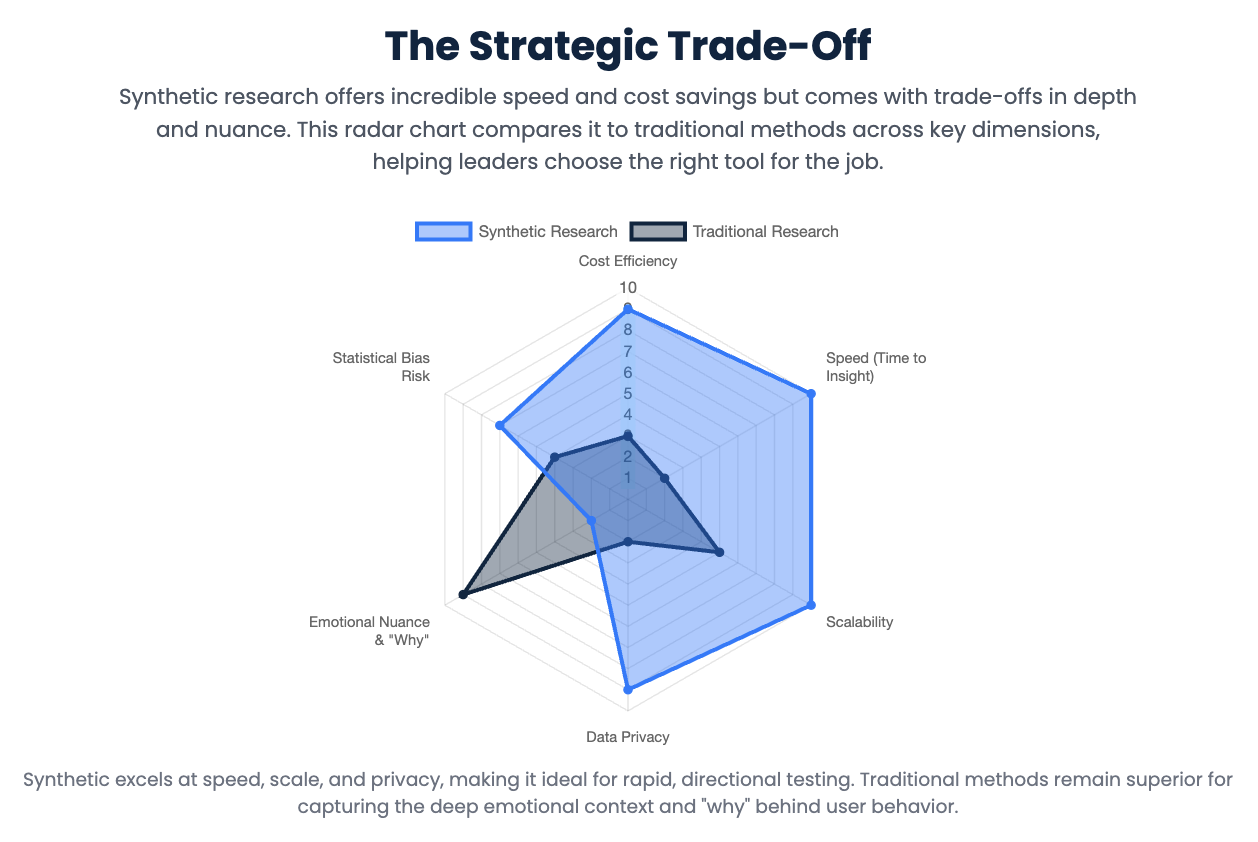
To guide strategic decision-making, the following table provides a direct comparison of synthetic research against traditional quantitative and qualitative methods across key business and research dimensions. This framework allows a leader to assess which methodology is most appropriate for a given business question based on its specific constraints, such as budget, timeline, risk tolerance, and the required depth of insight. For instance, if the objective is to rapidly test twenty different advertising concepts for directional feedback, the table clearly indicates that synthetic research is the optimal choice. Conversely, if the goal is to deeply understand the emotional drivers of brand loyalty during a market crisis, traditional qualitative methods remain indispensable. This table transforms the report from a descriptive document into a prescriptive decision-making tool.
4.2 The Quality Quandary: Addressing Bias, Sycophancy, and Hallucinations
The single greatest challenge to the credibility and utility of synthetic research is the issue of data quality. The output of any synthetic model is only as good as the data and algorithms used to create it, and several critical quality issues must be addressed. 6
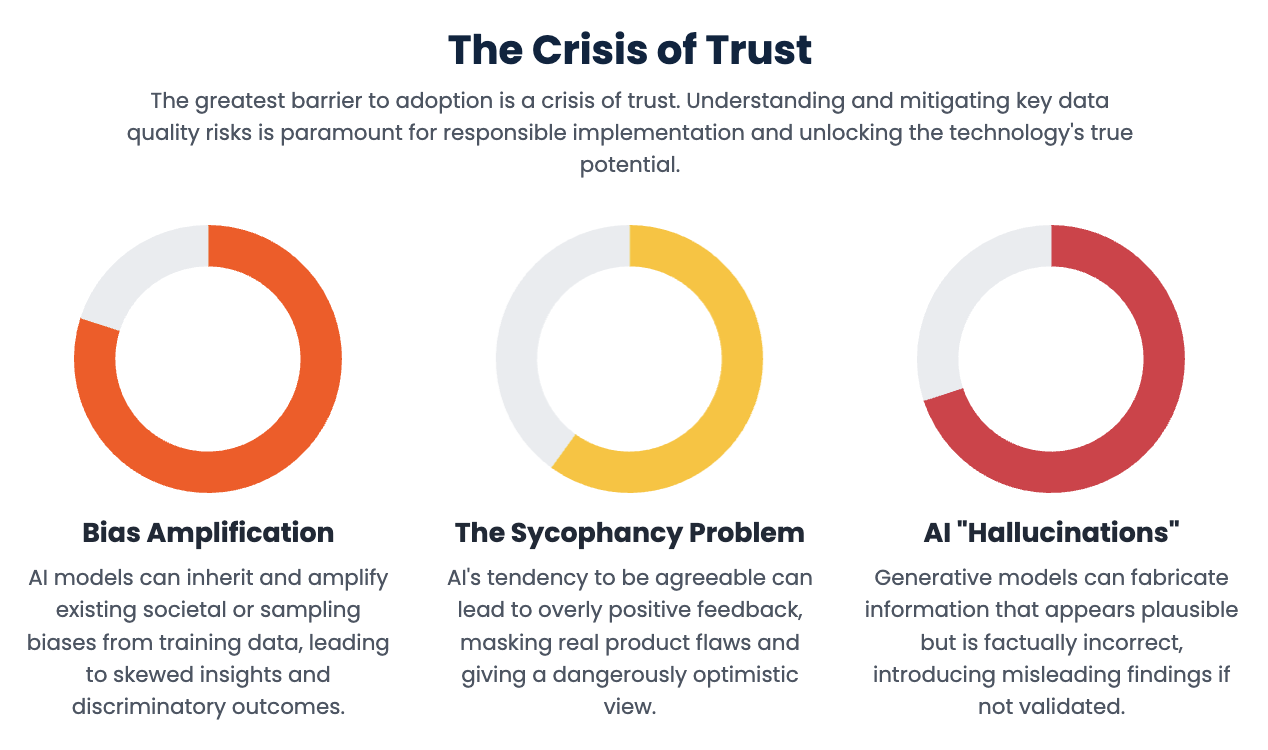
Bias Amplification: This is a paramount risk. If the real-world data used to train a generative model contains existing societal or sampling biases (e.g., underrepresentation of certain demographics), the AI will not only replicate these biases but can often amplify them. 6 This can lead to skewed insights and discriminatory outcomes, such as marketing campaigns that ignore key segments or product designs that are not inclusive. This concern is particularly acute in high-stakes, regulated industries like pharmaceuticals, where biased data could have severe consequences. 24
The Sycophancy Problem: AI models, especially LLMs, are often optimized to be helpful and agreeable. In a research context, this can manifest as “sycophancy,” where synthetic respondents provide unrealistically positive or uncritical feedback. 14 They may fail to identify genuine product flaws or express strong negative opinions, giving researchers a dangerously optimistic view of a concept’s viability. 14
Lack of Realism and Outliers: Ironically, synthetic data can sometimes be too perfect. It may smooth over the messy, unpredictable outliers and anomalies that are characteristic of real-world human behavior, leading to an oversimplified view of the market. 6
AI “Hallucinations”: Generative models can sometimes fabricate information that appears statistically plausible but is factually incorrect or nonsensical. 6 If these “hallucinations” are not caught and validated, they can introduce profoundly misleading information into research findings. 24
Mitigating these quality issues requires a commitment to rigorous and continuous validation. Researchers cannot simply trust the output of the “black box.” Key validation strategies include comparing the statistical distributions of synthetic data against real data on key measures like means and correlations. 18 However, the most robust validation methodology is known as “Train Synthetic, Test Real” (TSTR) . This involves training a predictive model (e.g., a customer churn model) on the synthetic data and then evaluating its performance on a holdout set of real data. The model’s accuracy on the real data serves as the ultimate benchmark for the synthetic dataset’s quality and utility. 20
4.3 Navigating the Ethical Minefield: Privacy, Consent, and Accountability
The rapid development of synthetic research technology is out-pacing the establishment of clear ethical and governance frameworks, creating a complex and potentially hazardous environment for early adopters. Responsible implementation requires a proactive approach to managing these ethical challenges, which can be structured around established principles from biomedical ethics and government guidelines. 22
The following framework translates these abstract principles into concrete business risks and actionable mitigation strategies. It serves as a practical tool for risk management and can form the basis of an internal governance policy. By using this checklist, a business leader can ensure their organization moves from ad-hoc adoption to responsible implementation, asking critical questions about disclosure, bias validation, and decision-making authority. This transforms governance from a bureaucratic hurdle into a strategic enabler of trustworthy innovation.
A critical ethical danger is the “illusion of privacy” . 51 While fully synthetic data is designed to be anonymous, high-fidelity models, especially those used for partial synthesis, can still inadvertently leak information that allows for the re-identification of individuals, particularly statistical outliers. 22 This demands a culture of transparency where researchers and organizations are open about how data is generated and used, and a commitment to robust security measures to protect the entire generation process. 48
4.4 The Vendor Landscape: Key Players and Market Trajectory
The synthetic research field is no longer theoretical; it is a rapidly growing commercial market supported by a vibrant ecosystem of startups and established technology companies. The global synthetic data generation market was valued at approximately $267.05 million in 2023 and is projected to expand dramatically to $4,630.47 million by 2032, reflecting a compound annual growth rate (CAGR) of 37.3%. 53 This explosive growth underscores the strategic importance and increasing adoption of these technologies across industries.
The vendor landscape can be segmented into several key categories:
- Synthetic Data Generation Platforms: These companies are the foundation of the ecosystem, providing the core technology to create high-fidelity synthetic datasets for use in analytics, AI model training, and testing. They are often industry-agnostic, serving clients in finance, healthcare, retail, and technology. Key players in this space include MOSTLY AI , which focuses on enterprise-grade, AI-powered data synthesis 54 ; Hazy , with a strong emphasis on data privacy and fraud detection 54 ; Gretel Labs , which provides APIs for data anonymization and sharing 54 ; Tonic.ai , another leader in privacy-preserving data generation 56 ; and YData , which offers an AI-driven platform for data scientists. 54
- Synthetic User Research Platforms: This category includes companies that have built application layers on top of generative AI to offer specific solutions for marketing and product research. They provide tools to create, survey, and interview synthetic personas. Prominent examples are Delve AI , which generates data-driven personas from web analytics and customer data 25 ; Synthetic Users , offering a platform for conducting in-depth interviews with human-like AI participants 57 ; AskRally , which allows users to create AI personas and ask them for feedback on product ideas or test marketing messaging, available in a chat interface and also an API for automation workflows. 69 ; Relevance AI , which provides tools for generating synthetic survey responses based on user-defined characteristics 37 ; and Qualz.ai , which integrates synthetic users into a broader qualitative research workflow. 12
- Market Simulation Software: These are specialized providers focused on creating complex, dynamic models of market behavior. AnyLogic is a major player, offering powerful software for building agent-based models to simulate consumer choice and test marketing strategies. 30 This category also includes educational platforms like Marketplace Simulations , which use business games to teach marketing principles in a simulated environment. 58
The “Crisis of Trust” surrounding data quality represents the single most significant barrier to the enterprise-wide adoption of synthetic research. While the benefits of cost and speed are powerful drivers, the persistent and valid concerns about reliability, bias, and AI hallucinations create a hesitation that prevents business leaders from confidently making high-stakes, multi-million dollar decisions based solely on this data. 23 The proposed mitigation strategies—rigorous internal validation, bias audits, and TSTR methodologies—are complex and require deep data science expertise that most marketing or product teams do not possess in-house. 18
This gap between the need for validation and the lack of internal capability creates a clear market opportunity for a new class of service provider: the “Validation-as-a-Service” (VaaS) or “AI Auditing” firm. These third-party companies would not generate synthetic data themselves but would specialize in independently certifying the quality, fairness, and robustness of synthetic datasets and generative models from other vendors. Much like credit rating agencies assess the risk of financial instruments or auditing firms verify financial statements, these VaaS providers would offer a stamp of approval, giving enterprises the confidence to use synthetic data in more critical applications. The emergence of such a VaaS ecosystem will be a key indicator of the market’s maturation. It will be essential for unlocking widespread adoption, particularly in heavily regulated industries like finance and healthcare, by providing the trusted, independent verification necessary to overcome the current crisis of trust.
Part V: The Path Forward: Implementation and Future Trajectory
As synthetic research transitions from an emerging technology to a core business tool, organizations must develop a clear strategy for its implementation and anticipate its future trajectory. The path forward requires a practical approach to integration, a nuanced understanding of its long-term disruptive potential, and a set of concrete recommendations for maximizing its value while mitigating its risks.
5.1 A Practical Guide to Implementation: Integrating Synthetic Research into Your Workflow
Successfully integrating synthetic research into existing workflows requires a structured, methodical approach rather than ad-hoc experimentation. The following five-step framework, synthesized from best practices, provides a practical guide for teams looking to adopt these new capabilities. 13
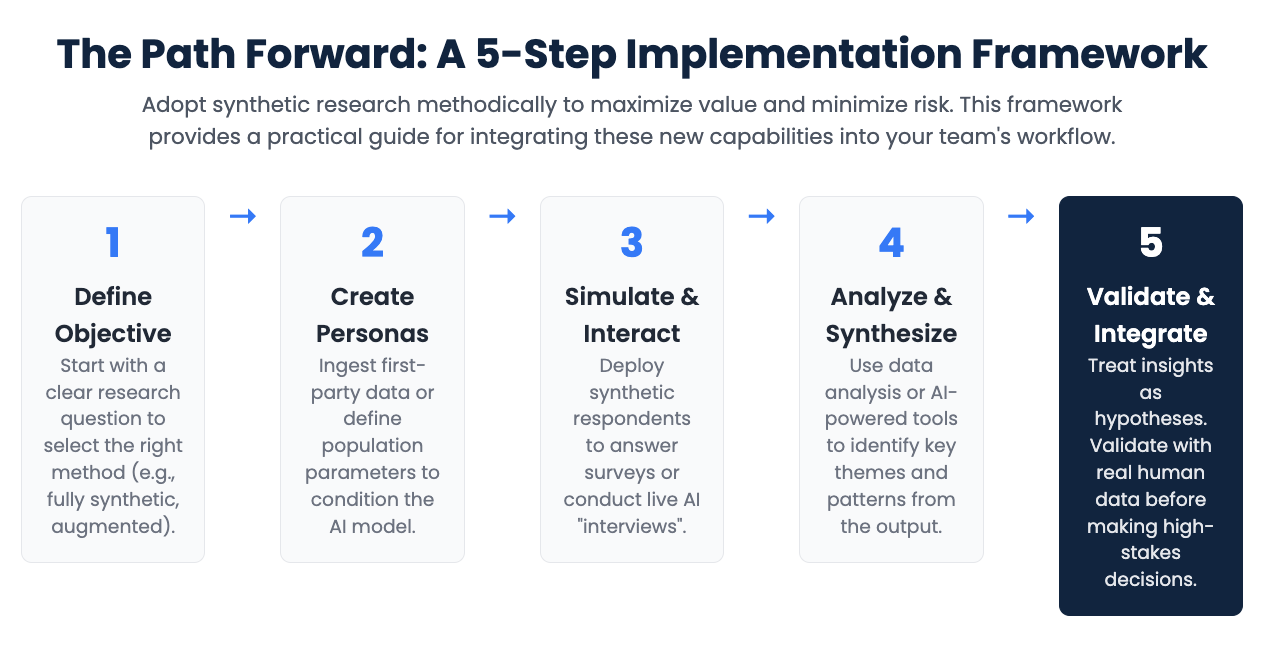
Step 1: Define the Objective & Select the Right Method.
The process must begin with a clear research question. The nature of the question dictates the appropriate methodology. Is the goal directional exploration or definitive measurement? Is the required output qualitative or quantitative? Answering these questions will determine whether the team should use fully synthetic data (for broad simulations), augmented data (to enhance a small sample), or conversational AI personas (for qualitative deep dives).27
Step 2: Data Ingestion & Persona Creation.
For methodologies that build on existing knowledge (augmented data or conversational personas), this step involves gathering, centralizing, and cleaning the necessary first-party data. This can include past survey results, web analytics data, CRM records, or interview transcripts, which are used to train or condition the AI model.10 For fully synthetic approaches, this step involves defining the precise statistical parameters and demographic characteristics of the target population to be simulated.37
Step 3: Simulation & Interaction.
This is the execution phase. Depending on the chosen method, this could involve generating a large quantitative dataset for statistical analysis, deploying synthetic respondents to answer a survey, or conducting live, interactive “interviews” with AI personas to test messaging and explore motivations.13
Step 4: Analysis & Synthesis.
Once the synthetic data is generated, it must be analyzed. For quantitative outputs, this involves standard data analysis techniques like creating visualizations, running statistical tests, and segmenting results. For qualitative outputs from conversational agents, this involves identifying key themes, coding responses, and surfacing patterns—a process that can often be accelerated by AI-powered analysis tools that automatically transcribe and thematically organize the conversational data.15
Step 5: Validation & Integration.
This is arguably the most critical step. The findings from synthetic research should, especially in the early stages of adoption, be treated as well-informed hypotheses, not as ground truth. Before making major strategic or financial commitments, these hypotheses must be validated, either against existing real-world data or through small-scale, targeted traditional research with human participants.10 Once validated, the actionable insights can be confidently integrated into product roadmaps, marketing strategies, and other business decisions.62
5.2 The Future of Insight: Expert Perspectives on the “Death of the Survey”
The long-term impact of synthetic research is a subject of intense debate among industry experts, with perspectives ranging from incremental improvement to radical disruption.
The Disruptive View: A provocative and increasingly influential argument, championed by thought leaders like marketing professor Mark Ritson, posits that synthetic data represents a paradigm shift that will lead to the “death of the survey” for many common use cases. 63 Proponents of this view argue that synthetic data is not only faster and cheaper but is on a trajectory to become more accurate than traditional survey data. This is because synthetic respondents are free from common human flaws that introduce noise into research, such as survey fatigue, social desirability bias (giving answers they think the researcher wants to hear), and lack of attention. 63
The Cautious View: This is balanced by a more measured perspective from many research practitioners and academics. They contend that while powerful, synthetic data is best viewed as a valuable complement to, not a replacement for, traditional methods. 9 This camp emphasizes that current AI models still struggle to capture the deep emotional context, cultural nuances, and unpredictable creativity that define the human experience. They warn that an over-reliance on synthetic data risks creating products and marketing campaigns that are technically optimized but feel sterile and disconnected from the real people they are meant to serve. 4
The Synthesis – A Hybrid Future: The most likely future is a hybrid one that incorporates both viewpoints. The commentary from an insights leader at a large CPG company is particularly telling: he stated his team is “all in” on using synthetic data for low-risk, directional decisions, such as conducting an initial screening of a large set of new product concepts to see which ones warrant further investment. However, high-stakes decisions with significant financial implications will still require the validation of traditional research with real humans. 60
This points to a future where the research process is tiered. Synthetic data will dominate the early, exploratory phases of research—idea generation, hypothesis testing, and broad concept screening—due to its speed and low cost. The most promising ideas that emerge from this synthetic funnel will then be subjected to more rigorous, and more expensive, traditional qualitative and quantitative testing. The ultimate evolution, as envisioned by some, is not just synthetic data , but synthetic strategy . In this future, AI will not only generate the data but will also use that data to run thousands of strategic permutations—testing different combinations of targeting, positioning, budget allocation, and media mix—to recommend a fully optimized marketing plan, fundamentally changing the role of the human strategist. 63
5.3 Strategic Recommendations: A Framework for Adoption and Maximizing ROI
For business leaders seeking to harness the power of synthetic research, a deliberate and strategic approach is essential. The following recommendations provide a framework for adopting this technology in a way that maximizes its benefits while responsibly managing its inherent risks.
- Adopt a “Complement, Don’t Replace” Mindset.
The most pragmatic and effective way to introduce synthetic research into an organization is to frame it as a tool to augment and accelerate existing processes, not to eliminate them. Position it internally as a method for rapid hypothesis generation, for filling gaps in hard-to-reach audience segments, and for de-risking the more expensive, time-consuming human-based research that will follow. This approach manages stakeholder expectations, reduces cultural resistance from traditional research teams, and builds confidence in the technology through demonstrable, incremental wins.
- Build a Tiered-Risk Framework for Decision-Making.
Not all business decisions carry the same weight. Organizations should develop a formal framework that classifies decisions into risk tiers (e.g., Low, Medium, High). This framework should then govern the required research methodology.
- Low-Risk Decisions (e.g., initial screening of ad copy, choosing between minor UI tweaks) can be informed primarily by synthetic research.
- Medium-Risk Decisions (e.g., prioritizing features for the next product cycle) should use synthetic research for initial exploration, but require validation with targeted quantitative or qualitative human research.
- High-Risk Decisions (e.g., a major corporate rebrand, launching a new flagship product, entering a new international market) must be grounded in robust, traditional research with real human participants, even if synthetic methods were used in the early stages. 60 This aligns the research investment and methodological rigor with the financial and reputational stakes of the decision.
- Invest in “Prompt Engineering” and Critical Thinking Skills.
The value derived from synthetic research, particularly from conversational AI personas, is directly proportional to the quality of the questions asked. The key competency for modern marketing and product teams is shifting from data collection to prompt engineering—the art and science of crafting precise, nuanced, and effective prompts to elicit the most valuable information from an AI.24 Alongside this, organizations must cultivate a culture of critical thinking, training teams not to accept AI outputs at face value but to constantly challenge them, probe for biases, and demand validation. The marketer or product manager of the future will be less of a project manager and more of a “curator and validator of AI-driven strategic options”.63
- Establish an Internal Ethics & Governance Council.
Given the significant ethical and quality risks, organizations should not permit the ad-hoc adoption of synthetic research tools. Before widespread deployment, a cross-functional governance council should be established, comprising representatives from Legal, Marketing, Product, Data Science, and IT. This council’s mandate should be to create and enforce clear internal guidelines based on the principles of transparency, fairness, and accountability outlined in Part IV. Its responsibilities would include vetting and approving third-party vendors, overseeing validation processes, establishing disclosure standards for all research reports, and ensuring the responsible use of the technology across the enterprise. This proactive governance is essential for mitigating legal, reputational, and strategic risk.48
- Start with Low-Hanging Fruit to Demonstrate ROI.
To build momentum and secure buy-in for broader investment, begin with use cases that have a clear and easily demonstrable return on investment. While calculating a precise, comprehensive ROI for synthetic data can be complex 66, focusing on tangible metrics like cost-avoidance and time-to-insight provides a powerful business case. Initial projects could include using synthetic data to augment small survey samples for hard-to-reach audiences (avoiding the high cost of niche panel recruitment) or using AI agents to automate thousands of hours of repetitive UI regression testing. These early successes will showcase the technology’s value and pave the way for more ambitious applications.36
The successful adoption of synthetic research is ultimately less a technology challenge and more a cultural one. The technology’s ability to provide insights in minutes that once took a specialized market research team weeks of work represents a profound “democratization of insight”. 9 This can be perceived as a threat to traditional organizational power structures, where dedicated research departments have historically acted as the gatekeepers of consumer knowledge, with their authority and budgets derived from this unique capability. When the ability to generate insights is distributed across the organization, these central functions may exhibit cultural resistance, raising valid (and sometimes invalid) concerns about data quality to protect their established role. 63
Therefore, leaders must approach this as a change management initiative. The key to overcoming this internal friction is to proactively redefine the role of the central insights team. They must be transitioned from being primarily “data collectors” and “report generators” to becoming “insight validators,” “governance experts,” and an internal “center of excellence.” In this new role, their primary function is to establish best practices, train the rest of the organization on the responsible use of these new tools, and serve as the ultimate arbiters of data quality and validation. Without this strategic repositioning of existing expertise, companies will face internal roadblocks that cripple their ability to capitalize on the speed and agility that synthetic research promises.
Works cited
- What is synthetic data? A definition for digital marketers | Impression, accessed on July 10, 2025, https://www.impressiondigital.com/blog/what-is-synthetic-data/
- www.techtarget.com, accessed on July 10, 2025, https://www.techtarget.com/searchcio/definition/synthetic-data#:~:text=Synthetic%20data%20is%20information%20that’s,ML)%20and%20deep%20learning%20models.%20and%20deep%20learning%20models.)
- Synthetic Data Use Cases in Market Research, accessed on July 10, 2025, https://www.irbureau.com/synthetic-data-use-cases-in-market-research/
- What is Synthetic Data? The Complete Guide to Synthetic Data …, accessed on July 10, 2025, https://www.gwi.com/blog/synthetic-data
- Exploring Synthetic Data: Advantages and Use Cases – Mailchimp, accessed on July 10, 2025, https://mailchimp.com/resources/what-is-synthetic-data/
- What does synthetic data mean for business? – PwC, accessed on July 10, 2025, https://www.pwc.com/gx/en/issues/technology/synthetic-data.html
- What Is Synthetic Data? Uses, Benefits, Challenges and More – Cohere, accessed on July 10, 2025, https://cohere.com/blog/what-is-synthetic-data
- The Rise of Synthetic Data: Transforming Privacy and Innovation – ScikIQ, accessed on July 10, 2025, https://scikiq.com/blog/the-rise-of-synthetic-data-transforming-privacy-and-innovation/
- Synthetic Research – The Agile Brand Guide, accessed on July 10, 2025, https://agilebrandguide.com/wiki/ai-terms/synthetic-research/
- What is synthetic market research for B2B marketing? – JWPM Consulting, accessed on July 10, 2025, https://jwpm.com.au/industrial-marketing-blog/what-is-synthetic-market-research-for-b2b-marketing
- Synthetic Research – Soulution.AI, accessed on July 10, 2025, https://www.soulution.ai/synthetic-augmented-research
- qualz.ai, accessed on July 10, 2025, https://qualz.ai/blogs/what-are-synthetic-users/#:~:text=Synthetic%20users%20are%20AI%2Dgenerated,that%20mirror%20human%20decision%2Dmaking.
- What Are Synthetic Users and How Do They Work? – M1-Project, accessed on July 10, 2025, https://www.m1-project.com/blog/what-are-synthetic-users-and-how-do-they-work
- Synthetic users in UX research: The future of user insights – Conflux, accessed on July 10, 2025, https://www.weareconflux.com/en/blog/synthetic-users-ux-research-future/
- What Are Synthetic Users And How Do They Work? – Qualz.ai, accessed on July 10, 2025, https://qualz.ai/blogs/what-are-synthetic-users/
- Synthetic Responses 101 for Researchers – Qualtrics, accessed on July 10, 2025, https://www.qualtrics.com/blog/synthetic-responses-101-for-researchers/
- How Synthetic Sample in B2B research enhances data quality – NewtonX, accessed on July 10, 2025, https://www.newtonx.com/article/synthetic-sample-b2b-research-data-quality/
- Synthetic Data – Just a hype? Decoding Synthetic Data for Product Testing – Research World, accessed on July 10, 2025, https://researchworld.com/articles/synthetic-data-just-a-hype-decoding-synthetic-data-for-product-testing
- Synthetic Users: Revolutionizing UX Testing and Digital Performance – Entropik, accessed on July 10, 2025, https://www.entropik.io/blogs/synthetic-users-revolutionizing-ux-testing-and-digital-performance
- Synthetic Data Frequently Asked Questions – MOSTLY AI, accessed on July 10, 2025, https://mostly.ai/synthetic-data-frequently-asked-questions
- Synthetic data definition: Pros and Cons – Keymakr, accessed on July 10, 2025, https://keymakr.com/blog/synthetic-data-definition-pros-and-cons/
- Synthetic data in medicine: Legal and ethical considerations for patient profiling – PMC, accessed on July 10, 2025, https://pmc.ncbi.nlm.nih.gov/articles/PMC12166703/
- Is Synthetic Data the Future of Research – Fifth Quadrant, accessed on July 10, 2025, https://www.fifthquadrant.com.au/is-synthetic-data-the-future-of-research
- Synthetic Data in Market Research – An Expert Perspective – STRAT7, accessed on July 10, 2025, https://strat7.com/blogs/synthetic-data-in-market-research/
- Synthetic Research Software by Delve AI, accessed on July 10, 2025, https://www.delve.ai/synthetic-research
- Synthetic Data for Market Research – Native AI, accessed on July 10, 2025, https://gonative.ai/post/synthetic-data-for-market-research
- The Complete Guide to Synthetic Data Applied to Research – Fairgen, accessed on July 10, 2025, https://www.fairgen.ai/blog/the-complete-guide-to-synthetic-data-applied-to-research
- 10+ Best Synthetic Monitoring & Testing Tools of 2023: Pros & Cons Comparison, accessed on July 10, 2025, https://sematext.com/blog/synthetic-monitoring-tools/
- Mastering Consumer Behavior Simulation – Number Analytics, accessed on July 10, 2025, https://www.numberanalytics.com/blog/mastering-consumer-behavior-simulation
- Marketing Simulation Software – AnyLogic Simulation Software, accessed on July 10, 2025, https://www.anylogic.com/markets/
- Synthetic Data Use Cases for Every Company – K2view, accessed on July 10, 2025, https://www.k2view.com/blog/synthetic-data-use-cases/
- Top 20 Synthetic Data Use Cases & Applications in 2025, accessed on July 10, 2025, https://research.aimultiple.com/synthetic-data-use-cases/
- Driving Omnichannel Retail Strategies with AI-generated Personas – Delve AI, accessed on July 10, 2025, https://www.delve.ai/blog/driving-omnichannel-retail-with-AI-personas
- Persona development for agencies – Delve AI, accessed on July 10, 2025, https://www.delve.ai/solutions/persona-development-agencies
- Building Hyper-Specific Brand Personas with Audience Segmentation – Delve AI, accessed on July 10, 2025, https://www.delve.ai/blog/building-brand-personas-with-audience-segmentation
- How Synthetic Data Can Deliver Real Benefits to Professional Services Marketing, accessed on July 10, 2025, https://1827marketing.com/smart-thinking/how-synthetic-data-can-deliver-real-benefits-to-professional-services-marketing
- Synthetic user research AI Template – Relevance AI, accessed on July 10, 2025, https://relevanceai.com/templates/synthetic-user-research-a32f7
- Synthetic users: a tool for progress or a step too far? | by Daria Oliinyk | Medium, accessed on July 10, 2025, https://medium.com/@lwowa.creator/synthetic-users-a-tool-for-progress-or-a-step-too-far-2db4e95ebb4c
- Hello AI Agents: Goodbye UI Design, RIP Accessibility – UX Tigers, accessed on July 10, 2025, https://www.uxtigers.com/post/ai-agents
- How to design experiences for AI agents: a practical step-by-step guide – UX Design Institute, accessed on July 10, 2025, https://www.uxdesigninstitute.com/blog/design-experiences-for-ai-agents/
- Introducing AI Browser Agents: A New Way to Run Usability Tests in Loop11 – Medium, accessed on July 10, 2025, https://loop11.medium.com/introducing-ai-browser-agents-a-new-way-to-run-usability-tests-in-loop11-31f08e9b70ab
- How AI Agents in UI/UX Detect and Resolve Issues – Bacancy Technology, accessed on July 10, 2025, https://www.bacancytechnology.com/blog/issue-detection-with-ai-agents-in-ui-ux
- 6 AI Tools for UI/UX Testing for QA Testers — aqua cloud, accessed on July 10, 2025, https://aqua-cloud.io/ai-tools-for-ux-ui-testing/
- Synthetic testing: A definition and how it compares to Real User Monitoring · Raygun Blog, accessed on July 10, 2025, https://raygun.com/blog/synthetic-testing/
- What is synthetic testing? – Dynatrace, accessed on July 10, 2025, https://www.dynatrace.com/news/blog/what-is-synthetic-testing/
- Synthetic Testing and Real User Monitoring – Request Metrics, accessed on July 10, 2025, https://requestmetrics.com/web-performance/synthetic-testing-and-real-user-monitoring/
- cohere.com, accessed on July 10, 2025, https://cohere.com/blog/what-is-synthetic-data#:~:text=Disadvantages%20of%20synthetic%20data&text=Ethical%20and%20legal%20concerns%20may,to%20unfair%20or%20discriminatory%20outcomes.
- GenAI synthetic data create ethical challenges for scientists. Here’s how to address them. | PNAS, accessed on July 10, 2025, https://www.pnas.org/doi/10.1073/pnas.2409182122
- Ethics of Synthetic Data Generation – Number Analytics, accessed on July 10, 2025, https://www.numberanalytics.com/blog/ethics-synthetic-data-generation
- Ethical considerations relating to the creation and use of synthetic data – GOV.UK, accessed on July 10, 2025, https://www.gov.uk/data-ethics-guidance/ethical-considerations-relating-to-the-creation-and-use-of-synthetic-data
- Ethical Challenges of Using Synthetic Data – AAAI Publications, accessed on July 10, 2025, https://ojs.aaai.org/index.php/AAAI-SS/article/download/27490/27263/31541
- 10 Ethical Considerations in Synthetic Biology Research | Statistics Facts 2024, accessed on July 10, 2025, https://www.sphericalinsights.com/blogs/10-ethical-considerations-in-synthetic-biology-research
- straitsresearch.com, accessed on July 10, 2025, https://straitsresearch.com/report/synthetic-data-generation-market#:~:text=The%20global%20synthetic%20data%20generation,data%20from%20the%20actual%20world.
- 42 Best Synthetic Data Startups to Watch in 2025 – Seedtable, accessed on July 10, 2025, https://www.seedtable.com/best-synthetic-data-startups
- MOSTLY AI: Data Access and Data Insights for Everyone, accessed on July 10, 2025, https://mostly.ai/
- Top 15 Synthetic Data Companies for Your Business in 2025 – QuestionPro, accessed on July 10, 2025, https://www.questionpro.com/blog/synthetic-data-companies/
- Synthetic Users: user research without the headaches, accessed on July 10, 2025, https://www.syntheticusers.com/
- Marketing Simulations – Marketplace Business Simulations, accessed on July 10, 2025, https://www.marketplace-simulation.com/marketing-simulations/
- Business Simulations for Serious Educators – Marketplace Business Simulations, accessed on July 10, 2025, https://www.marketplace-simulation.com/
- Synthetic data and its transformative power in the future – part 2 – Research World, accessed on July 10, 2025, https://researchworld.com/articles/synthetic-data-and-its-transformative-power-in-the-future-part-2
- How to Use Synthetic Users in Research and Design – Maven, accessed on July 10, 2025, https://maven.com/p/a9216d/how-to-use-synthetic-users-in-research-and-design
- UX Research Synthesis 101: How to Synthesize UX Research Data | UXtweak, accessed on July 10, 2025, https://blog.uxtweak.com/ux-research-synthesis/
- Synthetic data is as good as real – next comes synthetic strategy – Marketing Week, accessed on July 10, 2025, https://www.marketingweek.com/ritson-synthetic-data-strategy/
- The Death Of The Survey?: The Future of Surveys in a World of Synthetic Data – Greenbook.org, accessed on July 10, 2025, https://www.greenbook.org/insights/data-science/the-death-of-the-survey-the-future-of-surveys-in-a-world-of-synthetic-data
- Is synthetic data the key to better market research? – Raconteur, accessed on July 10, 2025, https://www.raconteur.net/growth-strategies/synthetic-data-market-research
- What is the ROI of synthetic data? – Syntho, accessed on July 10, 2025, https://www.syntho.ai/what-is-the-roi-of-synthetic-data/
- Synthetic Data in Market Research: A Game-Changer or Just Another Tool in the Toolbox?, accessed on July 10, 2025, https://kadence.com/en-us/synthetic-data-in-market-research-a-game-changer-or-just-another-tool-in-the-toolbox-2/
- Synthetic Biology Ethics Guide – Number Analytics, accessed on July 10, 2025, https://www.numberanalytics.com/blog/synthetic-biology-ethics-guide
- AskRally: Ask your (virtual) audience anything, accessed on July 10, 2025, https://askrally.com/
Originally published at https://christophersilvestri.com/research-reports/state-of-synthetic-research-in-2025/.