Welcome to Unpacking Meaning. If you received this from a friend and enjoy it, subscribe here.
Henry Ford was almost impossibly good at production.
With his moving assembly line, he changed industrial manufacturing by dropping Model T chassis assembly times from 12 hours to 93 minutes. He broke construction into 84 discrete steps and using conveyor belts, the system produced more and cheaper, from $850 to less than $300 per car. Ford sold millions of them.
But the same system that made Ford so powerful also made him slower to hear the market change.
General Motors, under Alfred Sloan, leaned into variety, price ladders, financing, model changes, colors, and different cars for different buyers. Ford could make more, but GM got better at noticing what different segments of the market actually wanted.
Which brings me to today’s point:
AI can build the thing before you understand the market.
The bottleneck used to be production. Could we design the page? Could we write the emails? Could we build the tool? Could we make the prototype?
Now the bottleneck is upstream:
- What is worth making?
- What problem are we really solving?
- Whose language are we using?
- What evidence would change our mind?
- What would our ICP repeat back after seeing this?
“Zoom in and obsess. Zoom out and observe. We get to choose.” ― Rick Rubin, The Creative Act: A Way of Being
More production capacity doesn’t automatically give you a better understanding of the market.
Actually, it can make the lack of understanding harder to spot, because weak assumptions now arrive beautifully formatted. And because the output looks complete, everyone feels like making massive progress.
So, you focus on the context you feed AI. But context is not magic, and not all context is created equal.
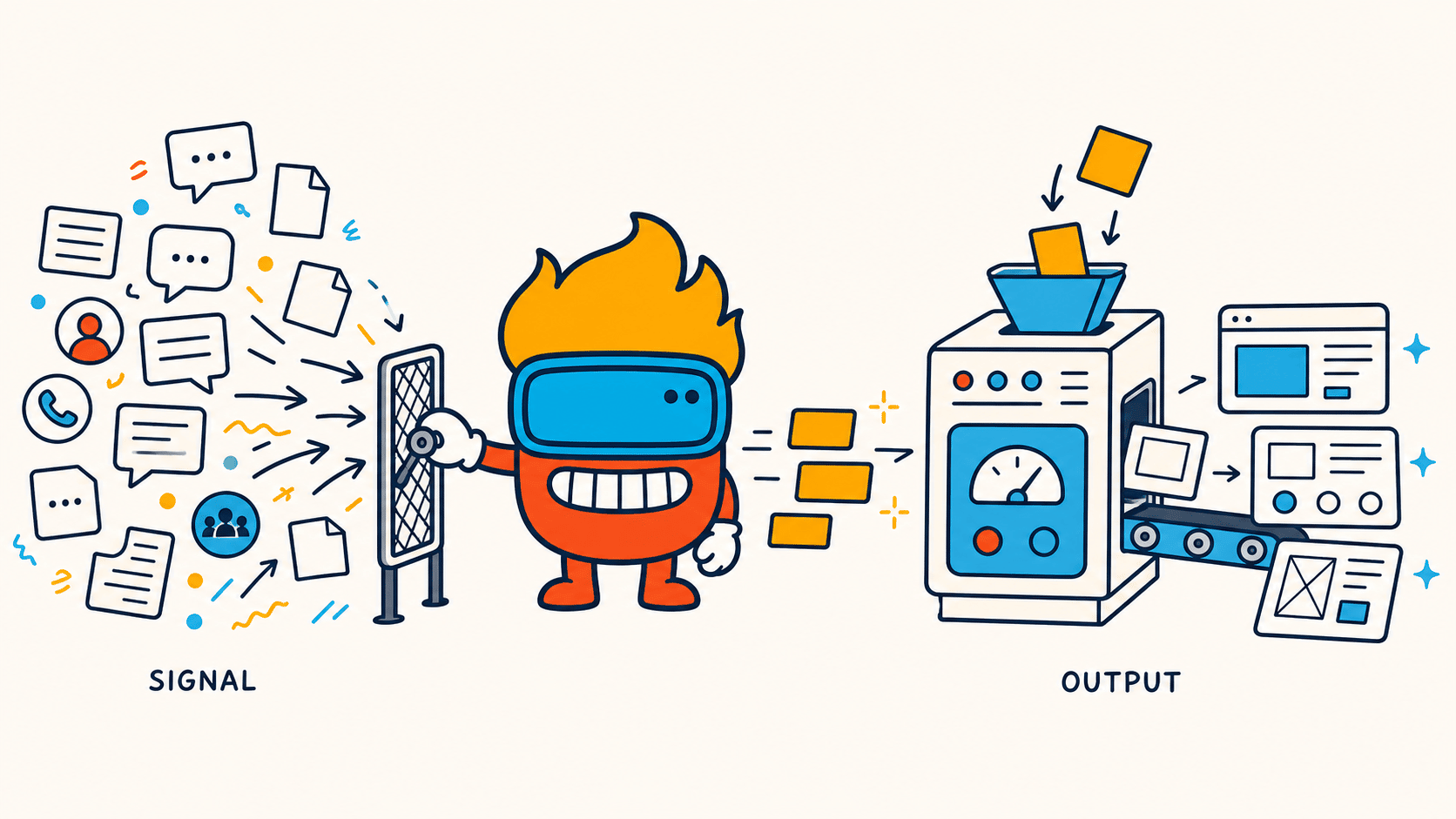
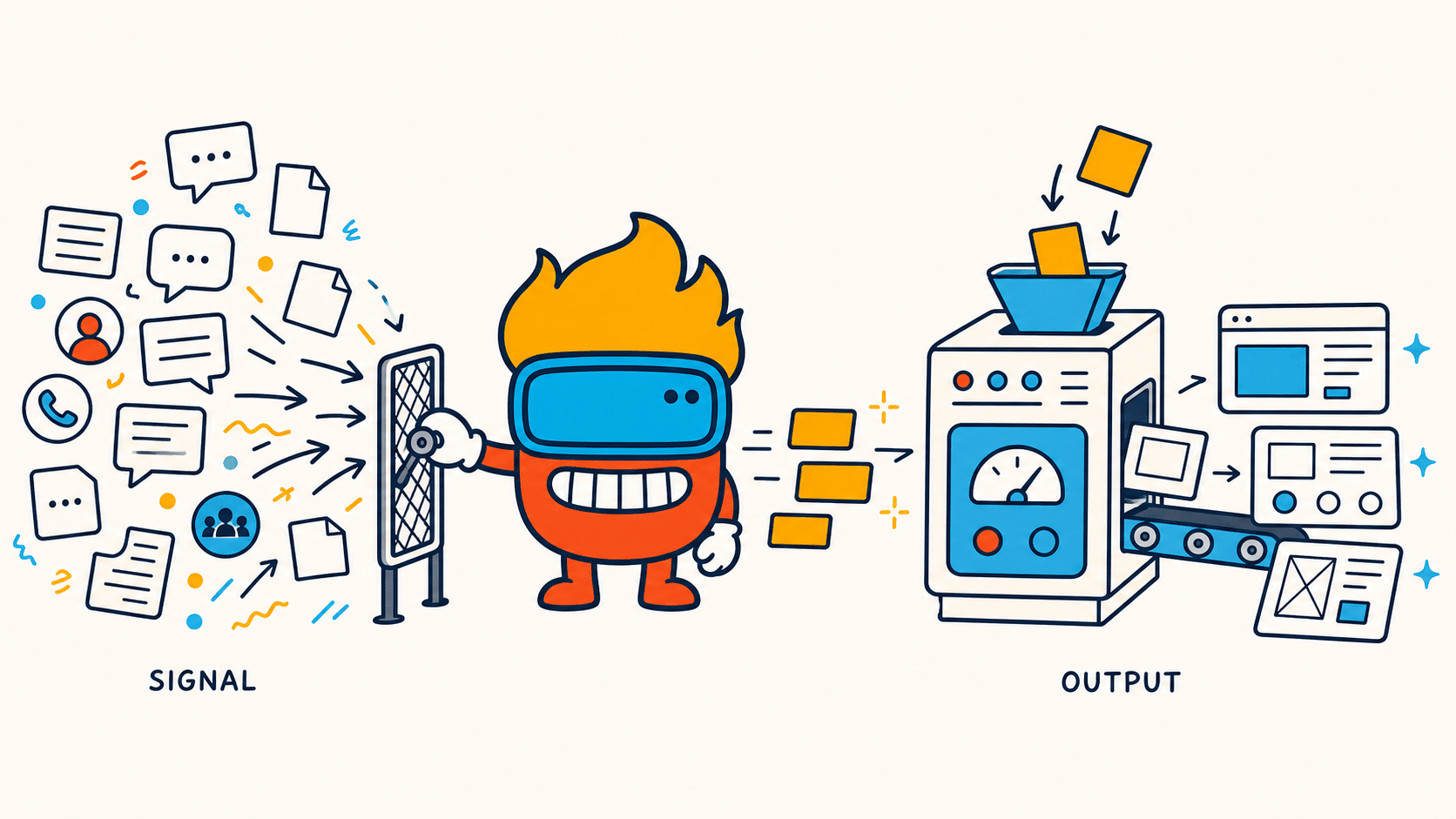
LLMs need context to be useful. Fine. But dumping more data into a model isn’t the same as giving it better signal.
A transcript from a real sales call is not the same as a fluffy ICP paragraph. A repeated theme or objection from five prospects is not the same as a brainstormed “pain point.” A live community question is not the same as a dusty old persona doc. The buyer’s exact VOC is not the same as our internally convenient category language.
Here’s how I think about it.
When building with AI, instead of asking if you gave it enough context, ask if you gave it the right context first.
- Is the context timely?
- Is it specific?
- Is it broad enough to reveal patterns?
- And is it deep enough to explain the psychology behind the words?
- Does it include anything that could surprise us?
That last one is important too.
If your market signal only tells you what you wanted to build in the first place, it’s just the confirmation you wanted to get, led by your biases.
The way I’m starting to think about this at Conversion Alchemy is in two layers.
First, there’s input signal.
That’s the research layer: customer interviews, call notes, community threads, LinkedIn comments, newsletter replies, sales objections, teardown patterns, analytics, support tickets, competitor messaging, and the raw phrases prospects use before they know get to know you.
Take an example of how I collect some of this data for content. With a community I’m part of, I have my agent notice repeated questions and pains from people who look like our actual audience, then turn those into sources and ideas we can use for content.
Then there’s contrast signal.
This is an extra copy validation layer I’m exploring for a tool idea right now. Can I create an agentic workflow where for every piece of copy I write, we also validate it with synthetic personas (AI-simulations of real-buyers, from real data) before it goes live? Which helps me answer the question:
Can the right visitor say who this is for, what problem it solves, why it matters, what makes it different, what proof exists, and what they should do next?
That gives us a contrast layer.
That’s different from using AI to rubber-stamp an idea. Done badly, synthetic validation just gives you fake confidence at machine speed. Done carefully, it helps expose where your message is ambiguous, where your proof is thin, where the buyer has objections, or where your page creates a decision problem you have no idea about.
So the workflow becomes less like:
text idea → prompt → asset → publish → hope
And more like:
text idea → market signal → context package → AI exploration → contrast signal → human judgment → asset
The AI still does a lot of work but your human judgment matters more, especially when it’s based on useful signals.
That’s why I’m increasingly skeptical of any AI marketing workflow that starts with “give me 20 campaign ideas.” – even with a huge amount of context. You still need the right context.
Production speed without signal just means contributing to the increasing amount of slop out there. Instead, think of AI as a tool to listen better and harder, to pay more attention, and turn market intel into better messaging decisions.

DISCOVERY
Paul Graham on essays, surprises, and thinking in public
I asked my Hermes agent to collect Paul Graham’s essays on writing as a tool for refining your thinking, and The Age of the Essay feels especially relevant to this our piece.
The useful connection is his point that writing isn’t just expressing a finished thought. It’s a way of finding one.
He writes about collecting surprises, noticing anomalies, following what feels interesting, and letting the work change the question instead of defending the first answer that comes up.
That’s also what good market signal should do.
If our VOC process only confirms the story we already wanted to tell, we’re failing. The best signal should occasionally make us uncomfortable, reroute the argument, or show us that the buyer is using a different mental model than we expected.
Read it here.
A useful explainer on tokens, context, and why AI workflows are really context workflows
I also found this video useful for understanding how LLMs deal with tokens, context, cached input, reasoning tokens, and multi-step conversations.
The part that connects to this issue: when you work with an AI agent, the “input” isn’t just your first prompt. The model keeps working from the conversation history, tool outputs, file reads, retrieved context, and the intermediate steps it’s already taken.
That matters because it makes “give the AI more context” sound too simple.
More context can help. But messy, stale, generic, or badly structured context can also point the model in the wrong direction. The better question is what kind of context you’re feeding the system, where it came from, and whether it represents a real signal or just a polished assumption.

RESONANCE
“Surprises are things that you not only didn’t know, but that contradict things you thought you knew. And so they’re the most valuable sort of fact you can get.”
— Paul Graham
Have a great weekend!
Cheers,
Chris

Chris Silvestri
Founder & conversion alchemist
🙌🏻 Let’s be friends (unless you’re a stalker)

When you’re ready, here’s a few ways I can help
🔍
Get a CXO audit
🙌
Let’s work 1-on-1
✍️
Turn words into gold
Not sure where to start? Take our free message-market fit scorecard.
Originally published at https://christophersilvestri.com/blog/your-ai-workflow-is-only-as-good-as-its-signal/.